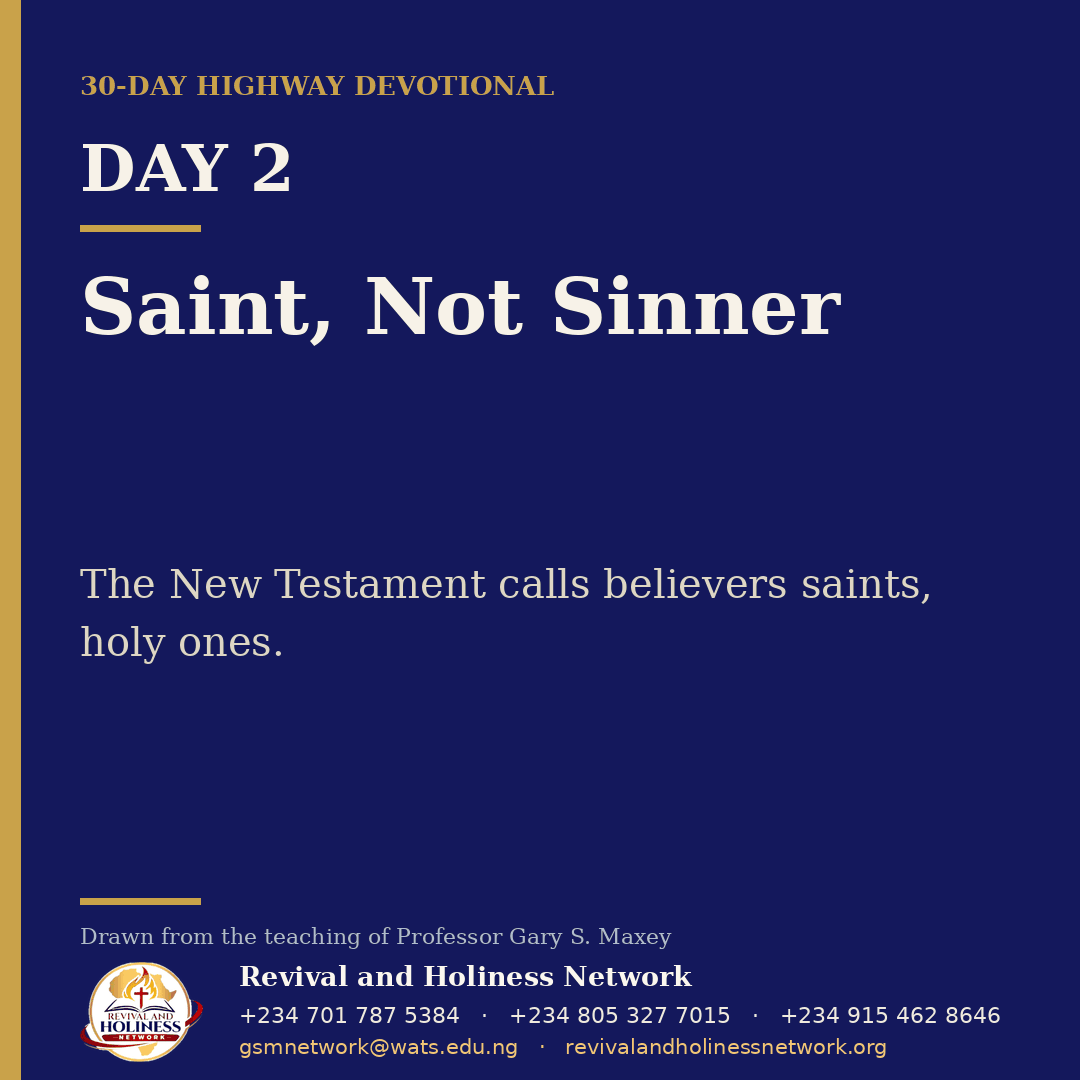
Saint, Not Sinner
Paul opens his first letter to the Corinthians by addressing the church as those sanctified in Christ Jesus and called to be saints. This was a church with serious problems. They quarreled, tolerated immorality and went to court against one another. Yet Paul begins by naming who they are in Christ.
Professor Maxey noticed how the New Testament uses its words. He counted the word sinner and found it applied to believers only twice, both times in 1 Timothy 1, where Paul calls himself the chief of sinners. Professor Maxey reads that as a reference to Paul's life before he met Jesus, when he persecuted the church. By contrast, Paul calls believers brothers about one hundred times and saints about forty times. The word saint literally means a holy one.
This matters because of how we speak. Professor Maxey quotes a common line, that just as a fish cannot deny water, so we cannot deny sin. He says this is not sound teaching. He has no objection to a believer who says he is a sinner saved by grace, unless the words mean that he cannot escape the slavery of sin. The Bible promises freedom from that slavery.
What we call ourselves shapes what we expect. A person who thinks of himself as a sinner expects to sin. A person who knows he has been washed, sanctified and justified (1 Corinthians 6:11) expects to obey, and he knows where to turn when he fails. This is not pride. It describes what God has done, and God deserves the credit.
What words do I use about myself when I pray, and what do they say I expect?
Read 1 Corinthians 6:9-11 aloud. Then pray using the words washed, sanctified and justified.
Lord, I thank you that you have called me a saint. Help me to live as the person you say I am, by your power and not my own. Amen.
Drawn from the teaching of Professor Gary S. Maxey.
Your progress is saved on this device only. The card is a square image you can post to your WhatsApp status or Instagram.